Monday, January 13, 2014

Things I Would Have If I Was Shipwrecked

Lesson 65 Essay

Assignment: Choose two devices, tools, or gadgets that you would like to have with you if you were shipwrecked like Robinson Crusoe

If I was shipwrecked like Robinson Crusoe, the items that I would like to have with me would be: a leatherman and duct tape.

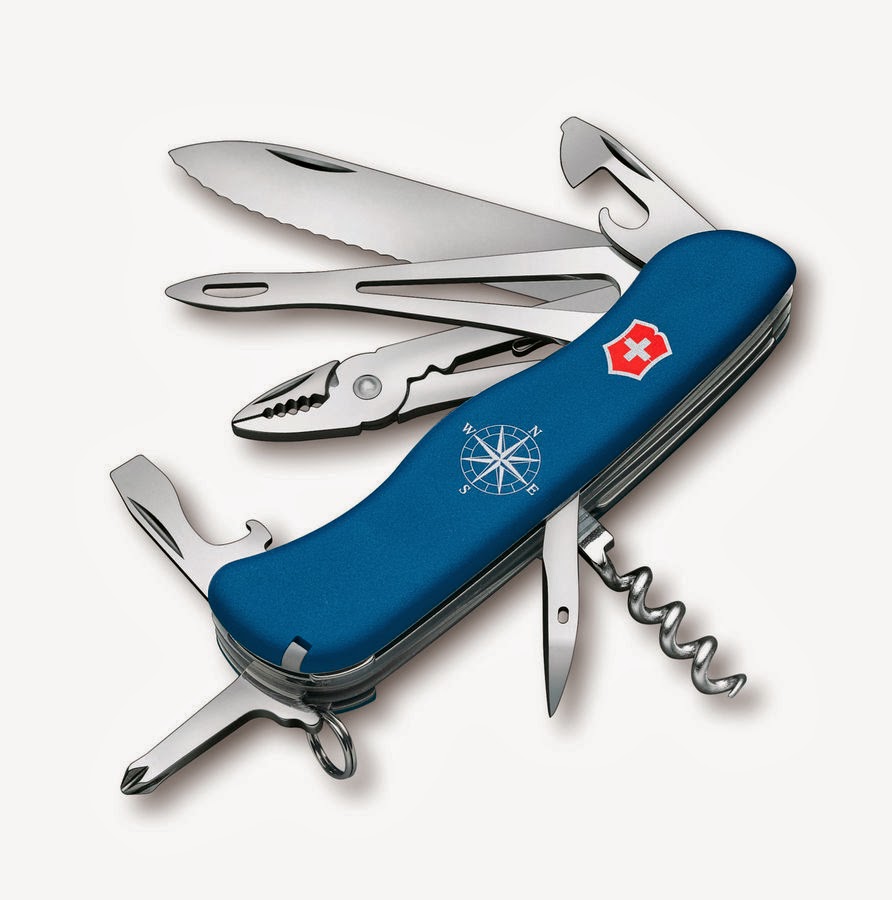
Leatherman: I chose a leatherman because I think they are a very useful multi-tool. With knives, scissors, screwdrivers, pliers, and files, all in one easy to hold body, this would help greatly in survival on an island.
Leatherman
Duct Tape: I chose duct tape because, well, who can go wrong with duct tape? It's extremely durable and long lasting. Duct tape is also waterproof, so you could construct make-shift cups and strainers for water.
Duct Tape

Friday, January 10, 2014

The Life of Kublai Khan

 Lesson 60 Essay

  Kublai Khan was considered to be the greatest ruler of the Mongols in China. Born in 1215, he was the grandson of Genghis Khan, and he became the fifth Khan of the Mongols.
    Even though he was an intelligent, and skilled warrior, Kublai did not rise to power until his thirties. Before Kublai became Khan, his brother Möngke Khan rule, and Kublai was put in charge of manning their territory. Kublai helped his brother overthrow the Song dynasty and unify the Chinese under the Mongols. Kublai came to power as the Great Khan several years later.

    As the Khan of the Mongol Empire, Kublai was much wiser and thoughtful in comparison to his predecessor, Genghis Khan. He ruled his subjects fairly, and, rather than utterly destroy civilizations, he treated them with generosity.
    In 1271, Kublai Khan established the Yuan dynasty. The economy was primarily based on agriculture, but, by building on past successes, they were able to prosper. Many of the buildings and roads were built or repaired.

    During Kublai Khan's reign, the Mongol empire enjoyed a time of great prosperity. Kublai was able to represent the height of the Mongol empire by controlling all of China. Kublai was among the first Far East rulers to have known contact with European traders, by having contact with Marco Polo.
    Kublai Khan lived to the age of 78. He outlived his wife and son. As he got older, he became very overweight and suffered from many diseases. He died in the February of 1294, after depression wore his body down. Kublai was buried in the Mongol burial site.

Monday, January 6, 2014

The Works of Thomas Aquinas

  Lesson 55

   Thomas Aquinas was born the son of a count in Italy in 1225. When Thomas was five years old, he began his education. Thomas was sent off to a university in Naples when he was old enough. While studying, Thomas was influenced by Aristotle's writings and also by a new order of monks called the Dominicans.
    At the age of 19, Thomas joined the Dominican monks, much to the dismay of his parents. In fact, his parents actually kidnapped their son to keep him away from the monks. After two years of captivity, Thomas “escaped” from his parents and rejoined the monks.

    After some time with the monks, Thomas decided to rewrite the Christian theology in a systematic way, using Aristotelian logic and thinking. Aquinas's greatest work was the Summa Theologica. However, Thomas left the manuscript unfinished, believing that he was called to a greater service than what he was currently working on.
    Thomas Aquinas became a priest and ordained in 1250. While he was teaching at a school in Paris, Thomas completed his Doctorate in Theology. Most of Thomas's time was spent in prayer, study, and writing during these years.

    Some time later, Thomas Aquinas was summoned by the Pope to attend a council. As Thomas was on his way, a falling branch hit him and he became ill shortly after. He was cared for by his friends, but several days later Thomas died.
Influence of Thomas Aquinas
    Thomas Aquinas's work greatly influenced the church by using Aristotle's logic to study scripture. Aquinas also argued that man can logically prove there is a god, based solely on the evidence in nature. He taught new connection between science and theology. Over time, philosophers began promoting the idea that logic and man's senses could tell him what he needed. This was a distortion of Aquinas's ideas. This focus on man's thinking continued into the time of the Renaissance. 
Tuesday, December 10, 2013

3 Types of Literature

 Lesson 55 Essay

   When you hear the word “literature”, what is the first thing that comes to mind? Is it a novel? A short story? Or maybe a novella? In literature, there are five major forms: novel, short story, novella, drama, and poems. This essay will cover three of these types of literature.

    Novel: A novel is the most commonly thought of types of literature. It also happens to be the longest. It's a normally a long prose narrative that describes
the life of fictional character and events. Novels are often in the form of sequential stories or series. A few examples of novels are: The Hunt for Red October by Tom Clancy, The Hitchhikers Guide to the Galaxy by Douglas Adams, and The Lord of the Rings by J.R.R. Tolkien.

    Short Story: The term “short story” often conjures up the thought of a set word limit. However, there is no limit to how long a short story should be. Like novels, short stories are written in the prose style. A short story makes use of plot, resonance, and other dynamic components to a greater degree than an anecdote, yet to a far lesser degree than a novel. Some famous short stories include: The Legend of Sleepy Hollow by Washington Irving, To Build a Fire by Jack London, and The Purloined Letter by Edgar Allan Poe.

    Novella: Novellas, like short stories and novels, are fictional stories. Novellas usually feature fewer conflicts, unlike novels, which have more conflicts to span across a longer story. Novellas often focus on just one conflict. The story of a novella is longer than a short story, but has a far more simplified plot line than a novel. Examples of novellas include: Call of the Wild by Jack London, A Christmas Carol by Charles Dickens, and The Old Man and the Sea by Earnest Hemingway.
 

Monday, December 2, 2013

Knighthood: The Origin of Knights

  Lesson 45 Essay

 The word “knight” was the title given to a person honored by a king or a monarch for a service. Originally, however, a knight was a mounted soldier and was considered a lesser noble. Knights eventually became just honored people, and they were recognized for noble deeds outside the military. In the Middle Ages, knights were part of two systems:
The Feudal System hierarchy
The service of the king's army
  The whole idea of “warriors on horseback”, came from the Franks after the fall of Rome and was expanded by Charlemagne. Any person who could ride and owned armor was considered a knight in these early times. Eventually, knighthood became a more refined position in the Feudal system. Knights were of the lower class nobles, and though they rode horses into battle, they were still distinct from the cavalry.
  An important part of knighthood was chivalry. The knights took this very seriously, even getting to the point where they organized a code for it. Chivalry was an ethical standard that all knights had to adhere to. When they weren't needed for battle, knights would live in castles or large fortified houses. Knighthood and chivalry was influenced by Christianity. Knights tried to pursue the values of “faith, hope, charity, justice, strength, modesty, and loyalty”. Chivalric ideals were popular in medieval writing and were often combined with romance in the Renaissance. The stories of a knight saving a damsel in distress is still very popular in modern culture.
  However, knighthood and chivalry was forgotten during the Renaissance. Knighthood is still granted in some societies today. Knighthood now is granted for doing great deeds.

Friday, November 22, 2013

King Alfred the Great

  Lesson 40 Essay

       Alfred the Great was one of the most notable kings of England's history. He ruled England from the 871-899. He was the the only English monarch to be called “the Great”.
        Alfred, at the age of four, was anointed to be king by the Pope in Rome. This was a strange act, seeing as Alfred had three older brother who were eligible for the crown. But, over time, each of his brothers were crowned as king and died shortly after. After this, Alfred became king.
        The reign of Alfred took off on a shaky start as the Danes were invading Wessex at the time. Even though the Danes were very strong, King Alfred eventually beat them. The Danish king, Gurthrum, was converted to Christianity at the peace treaty that Alfred proposed. This conversion to strengthened the ties between the two territories. In 866, Alfred the Great marched into London and reclaimed it from the Danish control. This reclaiming of London further unified Southern England.
        When Alfred wasn't fighting, he was busy reorganizing the military and setting up a fleet of longships, similar to the ships the Vikings used. Alfred also spent a lot of his life working on better education for his people. His greatest achievement as king was reviving education as a crucial part of English culture. He sought to have every young man in the country educated, regardless of their station.
        Throughout his life, Alfred dealt with much sickness, and he died in the year 899. His son, Edward, succeeded him on the throne.
 

Wednesday, November 13, 2013

The Theme of Treasure Island

 Lesson 35 Essay
      The book Treasure Island is a great story. There's pirates, parrots, treasure maps with black Xs. And, a theme.
        I think the theme of Treasure Island is: Be wary of the company you keep. In the book, Jim Hawkins finds himself amidst some very bad people who try to kill him.
        Also, another theme I think could fit in the story is: Money. Those bad people that Jim is traveling with are seeking the great amount of treasure marked on the map. They go so far as to kill most of the crew, just to get what they want.